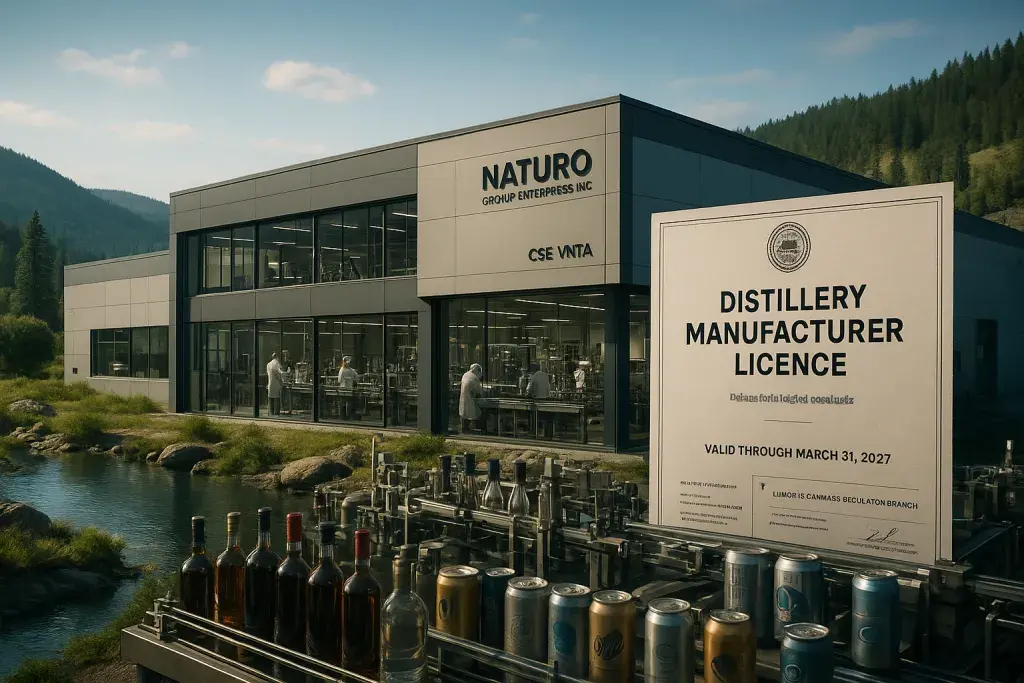
Vanta Holdings Inc., the Vancouver-based consumer health sciences company trading on the CSE under the ticker VNTA, has received a Distillery Manufacturer Licence from British Columbia's Liquor and Cannabis Regulation Branch - a regulatory milestone that broadens the permitted scope of commercial operations at its 40,000-square-foot Bridesville, B.C. facility. The licence was issued to Naturo Group Enterprises Inc., Vanta's wholly-owned subsidiary, and authorizes commercial spirits manufacturing within a designated licensed production area. It is valid through March 31, 2027, subject to annual renewal.
For operators and investors tracking licensed manufacturing infrastructure in regulated beverage categories, the development offers a useful case study in how a company can stack regulatory permissions over time to build a more versatile co-manufacturing platform. The LCRB governs both liquor and cannabis licensing in British Columbia, making it one of the more integrated regulatory bodies of its kind in Canada - a structure that differs considerably from the bifurcated state-level systems that operators managing, say, dispensary software in Nevada or other U.S. jurisdictions deal with daily, where cannabis and alcohol compliance tracks remain entirely separate. The regulatory layering Vanta is executing in B.C. is precisely the kind of operational build-out that draws the attention of contract brands looking for turnkey manufacturing solutions without carrying their own licensed facility overhead.
This licence does not stand alone. Vanta announced a British Columbia Liquor Co-Packing Licence back in December 2025, which permitted the company to manufacture and package beverage alcohol products on behalf of third-party licensed brands. That authorization mattered - but it stopped short of allowing Naturo Group to independently source ingredients and manage its own licensed production activities. The Distillery Manufacturer Licence closes that gap. In practical terms, the company can now operate as a licensed manufacturer rather than simply a contract packager, which opens the door to a broader range of product development and commercialization arrangements. Spirits, wines, RTD beverages, coolers, and emerging better-for-you adult beverages are all within the facility's permitted scope.
What a Licensed Manufacturing Stack Actually Enables
The business logic here is straightforward, even if the regulatory pathway is not. Beverage brands - particularly smaller or emerging labels - face substantial capital and compliance barriers to building their own licensed production infrastructure. A facility that already holds distillery manufacturing authorization, maintains bottling lines across glass, aluminum, and PET formats, and can document regulatory compliance removes a meaningful barrier to market entry for those brands. Vanta's pitch is essentially: bring your brand, we supply the licensed facility, the production expertise, the co-packing throughput, and the regulatory standing.
Management has been explicit that the primary intended use of the licence is to support third-party customer relationships rather than to build out a Vanta-branded spirits portfolio. That's a deliberate positioning choice. Contract manufacturing and co-packing revenue streams offer facility utilization benefits without requiring the company to carry the brand-building costs, distribution overhead, or retail activation expense that launching proprietary spirits would demand. The facility's existing premium alkaline spring water source also gives it a differentiated input for RTD and functional beverage development - a practical asset when brands are evaluating ingredient sourcing as part of a manufacturing relationship.
Regulatory Scope and Its Limits
A few things worth understanding clearly: the Distillery Manufacturer Licence does not grant Vanta or Naturo Group the ability to sell beverage alcohol directly to end consumers. Under B.C.'s regulatory framework, alcohol products must move through appropriately licensed third parties for distribution and sale. That's not a workaround - it's the structure. The licence expands what can be made and how it can be managed internally; it does not alter the downstream distribution requirements. Any co-manufacturing partner or brand working with the facility will need to hold or arrange for their own distribution licensing, which is a compliance consideration brands should account for when evaluating partnership terms.
The licence is also time-limited by design. Annual renewal is standard operating procedure under the LCRB framework, and continued authorization depends on the company maintaining compliance with all applicable regulatory conditions. That's not a red flag - it's how beverage alcohol licensing works in B.C. - but it does mean the operational value of the licence is contingent on ongoing regulatory standing, not a permanent entitlement.
Where This Fits in Vanta's Broader Strategy
Vanta's stated core focus remains its U.S.-facing longevity and consumer health sciences platform - a direct-to-consumer model built around peptides, nutraceuticals, and premium hydration products. The manufacturing infrastructure in Bridesville functions as an operational backbone supporting that strategy, but management has signaled consistently that the facility should also carry its own commercial weight through third-party manufacturing relationships. Diversified revenue streams from co-packing and contract manufacturing offset facility overhead and create operating leverage that a single-category production model wouldn't.
What's striking about this particular move is the sequencing. Vanta didn't enter spirits manufacturing speculatively - it layered the Distillery Manufacturer Licence on top of an already-operational co-packing authorization, which suggests the company is building its manufacturing permissions incrementally as commercial demand and regulatory opportunity align. That's a more defensible approach than overbuilding licensed capacity ahead of demonstrated customer interest. Whether the pipeline of third-party beverage brands materializes at the scale management is targeting remains to be seen, but the infrastructure and regulatory standing are now in place to support it.