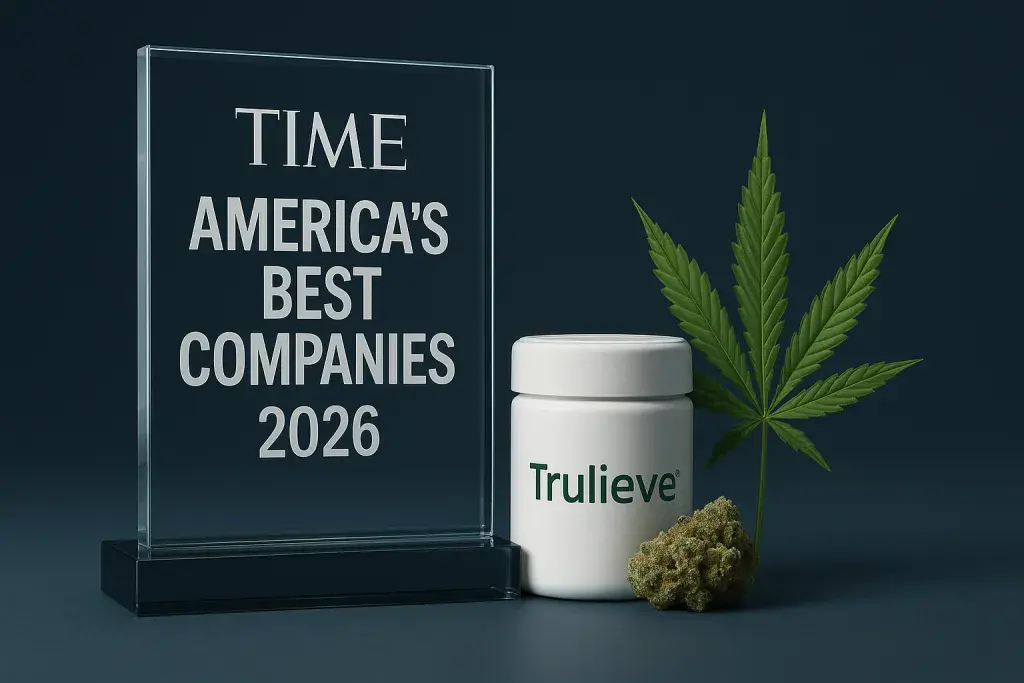
Trulieve has secured a spot on TIME's 2026 list of America's Best Companies, one of only two cannabis operators to make the cut out of more than 7,200 companies evaluated. Compiled with Statista, the ranking weighs employee satisfaction, financial strength, and sustainability transparency - metrics that rarely get applied to plant-touching businesses given how federal law still treats them. Trulieve landed at 921, a modest position numerically but a meaningful one for an industry still fighting for basic legitimacy in mainstream business circles.
For multi-state operators, recognition like this carries weight beyond the press release. Cannabis companies operate under 280E, the tax code section that bars standard business deductions for anything touching a federally illegal substance, which means every operational efficiency matters more than it would in a typical retail sector. Back-office systems, inventory controls, and point-of-sale infrastructure aren't just convenience upgrades here - they're survival tools. That's part of why operators expanding into new markets pay close attention to platform choice; a dispensary group scaling into Michigan, for instance, might look at POS software for Michigan cannabis retailers to keep seed-to-sale tracking, METRC reporting, and tax compliance aligned across state lines without duplicating staff or systems. POS software for Michigan cannabis retailers
Why Financial Strength Is Hard To Fake In This Industry
Cannabis companies can't access traditional banking the way other retailers do, and that single fact shapes nearly everything about how they run. Cashless payment workarounds, cash-heavy vaults, and limited access to conventional lending mean operators have to build financial discipline into every layer of the business, from wholesale pricing on flower to how they manage inventory shrinkage on high-value SKUs. A company earning recognition for financial strength in this environment has, in effect, proven it can survive without the safety nets most industries take for granted. That's not a small thing. It's the difference between a business built to last and one riding a market cycle.
What Sustainability Transparency Signals To Regulators And Investors
Sustainability reporting has become a quiet expectation for larger cannabis operators, even absent a federal mandate requiring it. State regulators increasingly ask about energy use in cultivation, water management, and packaging waste as part of license renewal conversations, particularly in markets with strict compliant packaging rules. Investors watching the sector, meanwhile, treat transparency as a proxy for operational maturity - companies willing to disclose environmental data tend to have cleaner compliance logs elsewhere too. Trulieve's inclusion on a mainstream business list, alongside companies from unrelated industries, suggests the scoring didn't grade cannabis operators on a curve. That matters for an industry still trying to convince Wall Street it plays by real rules.
The Bigger Picture For Operators Watching From The Sidelines
One list placement doesn't rewrite the regulatory picture. Cannabis remains a Schedule I substance federally, dispensary operators still can't deduct ordinary business expenses under 280E, and interstate commerce restrictions keep even the largest multi-state operators running fragmented, state-by-state operations. But recognition from a publication with no stake in the cannabis debate offers something rarer than a marketing win - a data point suggesting the industry's best-run companies can compete on the same terms as retailers, banks, and manufacturers outside the plant-touching space. For smaller operators and license holders watching the majors, the takeaway is straightforward: the operational bar keeps rising, and compliance, financial discipline, and transparent reporting are no longer optional extras. They're what separates companies built to last from those just holding a license.