A quiet but consequential shift is underway in how states approach mental health treatment for first responders - and cannabis operators are already inside the policy perimeter. Several states enacted or advanced legislation this year that either expands access to emerging therapies, including medical cannabis and psychedelics, or builds new protections around first responders who use cannabis lawfully off duty. For dispensaries, particularly those operating in medical markets, these laws carry direct compliance and operational implications worth understanding now.
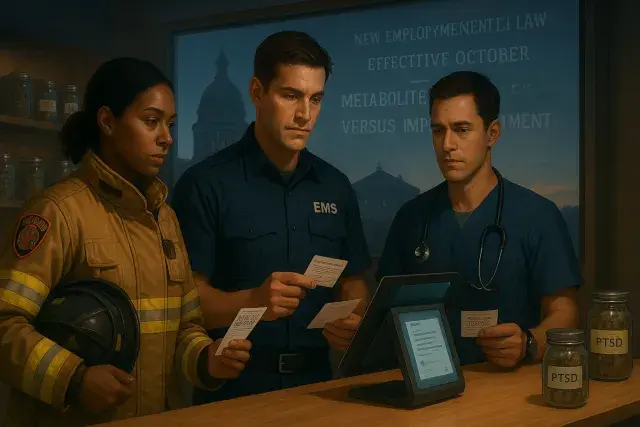
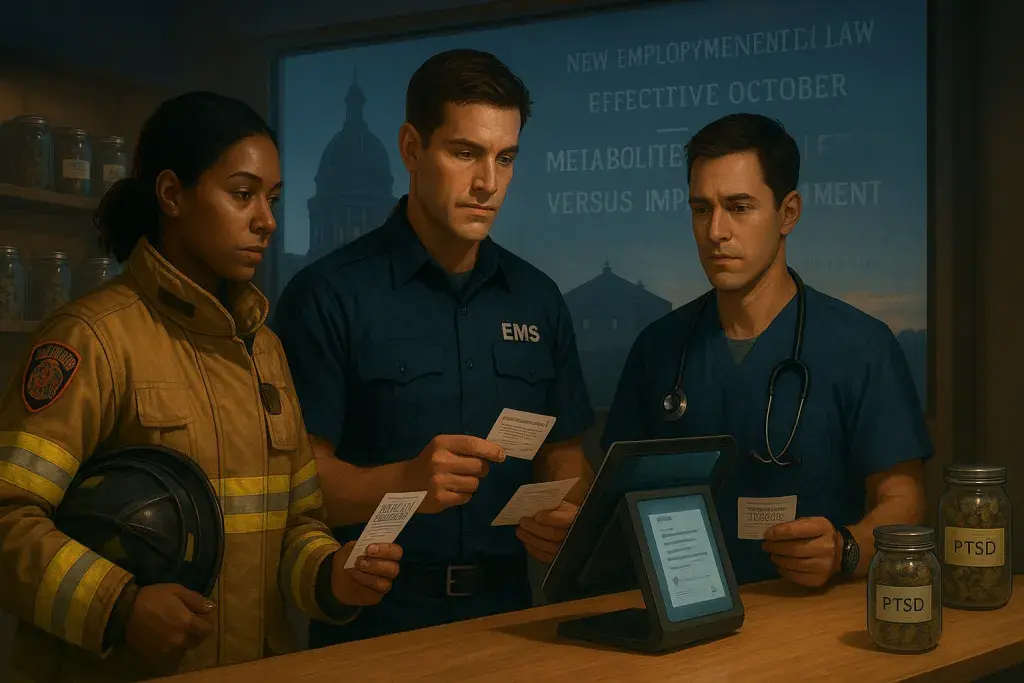
Maryland's new employment-protection law - effective October - is the most immediately relevant development for cannabis businesses. It shields firefighters, EMTs, paramedics, and other rescue workers who are registered medical cannabis patients from being fired or disciplined solely because they test positive for cannabis metabolites, provided they are not impaired on duty. That distinction - metabolite presence versus active impairment - is exactly the kind of regulatory nuance that touches dispensary-level record-keeping, patient verification workflows, and staff training in states where medical programs run alongside adult-use markets. Operators using a cannabis retail platform for Massachusetts and neighboring medical-state markets already handle complex patient eligibility and compliance documentation; Maryland's framework adds another layer to what it means to serve a protected medical patient population responsibly.
The underlying driver here matters. As retired Missouri firefighter and paramedic Jason Cerrano put it, exposure to traumatic events accumulates over a career in ways that aren't always visible until they are. "Stuff builds up over time," Cerrano said, "and what happens is you see so many things that the crazy stuff starts to at least seem normal." First responders represent a substantial portion of registered medical cannabis patients in several states - a population that now, in Maryland at least, carries explicit legal protections that dispensaries and their compliance teams need to understand.
Ohio and Connecticut Signal Broader Momentum
Ohio Republican Gov. Mike DeWine signed legislation creating a Post-Traumatic Stress Injury Commission that will review first responder applications for financial assistance covering treatment costs. That's traditional infrastructure - commissions, cost reimbursement, application processes. Connecticut went a different direction. A new law there expands a Yale University psilocybin-assisted therapy pilot program beyond its original cohort of veterans, retired first responders, and frontline health care workers to include any state resident 18 or older who meets clinical eligibility criteria. That expansion doesn't touch cannabis directly, but it signals something important: regulated psychedelic therapy and medical cannabis are increasingly part of the same policy conversation about first responder mental health, and both operate inside the same general framework of supervised, clinically managed therapeutic use.
In Missouri, a bill advanced this legislative session that would allow veterans and first responders in approved research studies to receive psilocybin and ibogaine under medical supervision for PTSD and other mental health conditions. The legislature adjourned in May before the bill reached the governor's desk. Still, the fact that it advanced at all - in a state that has already legalized adult-use cannabis - reflects how quickly the therapeutic regulatory horizon is moving.
What This Means for Operators and Compliance Teams
Here's the practical read for cannabis retailers and multi-state operators: employment-protection laws for medical patients change the downstream liability calculus for employers in those states - including, in some cases, cannabis businesses themselves that employ first responders or have staff who are registered patients. Beyond that, these laws tend to generate patient volume. When first responders know they are legally protected, enrollment in medical programs typically rises. That means dispensaries in states like Maryland should expect their medical patient registers to reflect broader occupational diversity, and their staff need to be equipped to handle patient interactions with discretion and accuracy.
Compliance documentation becomes more important, not less, as these protections take hold. A first responder patient who faces an employment challenge will likely need clear records of their registry status and dispensary visit history. Point-of-sale systems that maintain clean, timestamped transaction records and support patient verification protocols are not a back-office nicety - they are the paper trail that makes these legal protections functional in practice.
The psychedelic therapy thread is worth watching separately. It does not affect current cannabis licensing or dispensary operations. But the regulatory models being built around supervised psilocybin therapy - clinical eligibility review, institutional oversight, tightly restricted access - echo the structure of early medical cannabis frameworks. Operators who have built compliance infrastructure around medical cannabis know that model well. The question is whether those policy architectures eventually converge, and at what pace state legislatures are willing to move.
For now, the clearest action item is straightforward: if you operate in Maryland or any state actively expanding medical cannabis patient protections for first responders, review your patient intake procedures, confirm your POS documentation meets state record-keeping standards, and make sure your floor staff understands what protected patient status means in your jurisdiction. The law has moved. Operations need to follow.