
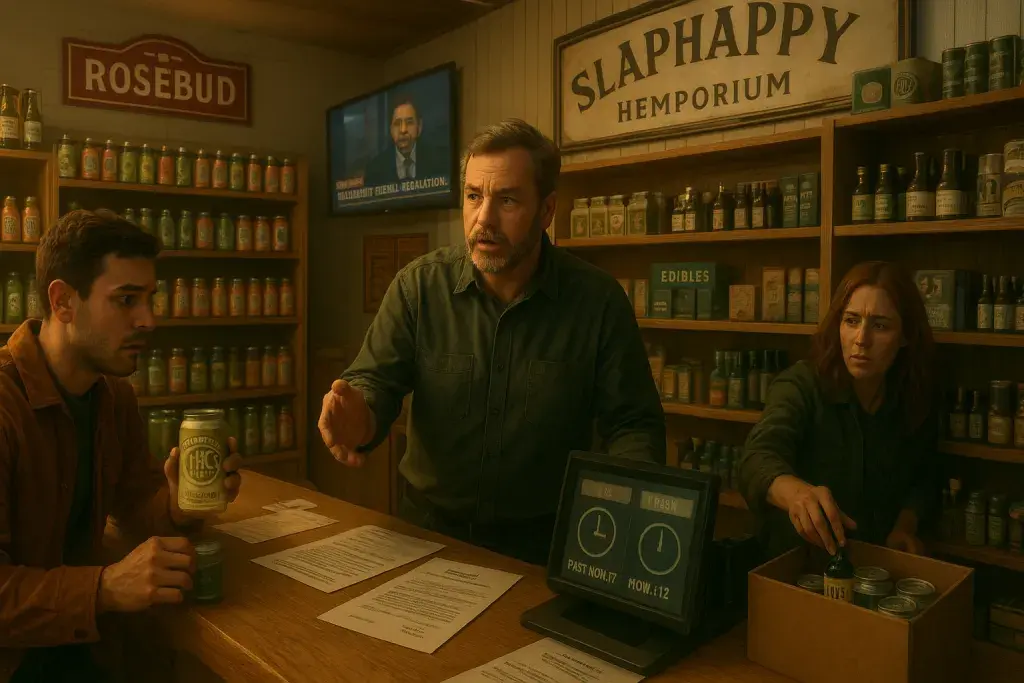
Missouri retailers selling hemp-derived THC beverages got a reprieve, or at least the possibility of one, after the U.S. Senate approved a short-term funding measure early Saturday that would push back the federal ban on intoxicating hemp products until Dec. 11. The bill still needs House approval and the president's signature before it's final. But if it clears both, hemp beverages could keep moving through Missouri stores past the Nov. 12 deadline that Gov. Mike Kehoe set when he signed the state's hemp ban this spring.
Here's the mechanism that makes this fight so specific to beverages: Missouri's law was written to largely mirror the federal ban, but lawmakers built in a narrow carve-out. If Congress delays its own ban, everything else in the intoxicating hemp category - edibles, tinctures, vapes, you name it - still goes off shelves on schedule. Beverages alone get to ride out the federal delay. That's an unusual bit of statutory drafting, and it puts retailers in the position of running two separate compliance clocks for what many customers see as the same general product category. For operators managing SKU-level inventory across categories, that split creates real friction at the POS terminal, not just on paper. Retailers in adjacent regulated markets have had to solve similar category-specific compliance puzzles before; platforms like Rhode Island cannabis POS systems, for instance, are built around the idea that state rules can diverge sharply from federal timelines, and Missouri's beverage carve-out is a fresh example of why that flexibility matters.
Jay Patel of the Missouri Hemp Trade Association called the Senate's 61-31 vote a "good sign," and noted there's apparent support at the federal level for building out more permanent regulation. Fair enough - but as he also pointed out, whatever happens in Washington won't fully resolve Missouri's problems. The state ban is still coming for most hemp product categories regardless of the federal timeline, and the association's lawsuit, filed last month in the U.S. District Court for the Western District, argues the state law's definitions of hemp and marijuana are unconstitutionally vague. That litigation is a separate track entirely from the funding bill drama, and it could outlast whatever Congress does by December.
What This Means for Retail Operations
For a business like Slaphappy Hemporium in Rosebud, the practical effect is lopsided. Owner John Grady said the Senate action makes it likely his company's THC seltzers can keep selling through December, which matters because the business started as a beverage producer. But that's only part of the shelf. Edibles and other hemp products the Gradys carry are still slated for removal under Missouri law, delay or no delay at the federal level. Customers, sensing the deadline, have already started stocking up on items they know are going away regardless of what Congress does - a pattern familiar to anyone who's watched a regulated category face a hard compliance cutoff. It tends to produce a short-term sales bump followed by a real inventory and revenue gap once the banned SKUs disappear from wholesale menus.
The Bigger Compliance Picture
What's striking here is how much hinges on definitions. The lawsuit's vagueness argument goes to the heart of how hemp and marijuana get distinguished under Missouri law, a distinction that determines which products can legally sit on a shelf at all. For compliance teams, that ambiguity is the real operational risk - not just the calendar deadline. A law that's overturned or narrowed by a court after November 12 could mean products pulled prematurely, wasted lab testing and COA documentation, and reordered wholesale relationships that are hard to unwind quickly. Operators watching this closely are right to treat the funding bill as one variable among several, not a resolution. The federal delay buys time; it doesn't settle what "intoxicating hemp" actually means in Missouri, and that unresolved question is what will keep shaping purchasing decisions, packaging compliance, and store-level risk through the rest of the year.