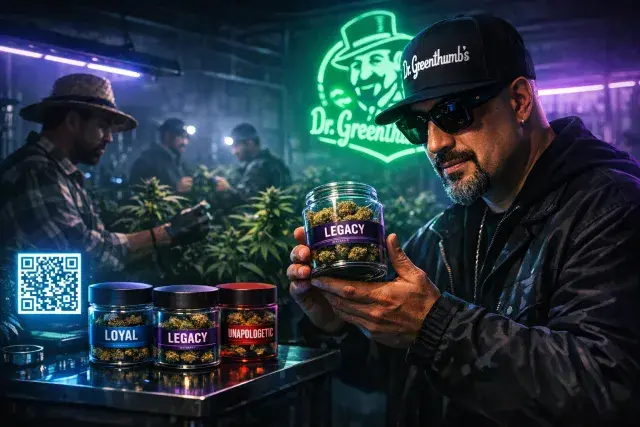

Cash, not revenue, is what separates surviving cannabis operators from the ones getting picked apart by creditors. Green Thumb Industries (OTC: GTBIF) posted first-quarter numbers that make the case plainly: $300.2 million in revenue, up 7.4% year over year, paired with $76 million in operating cash flow, $93.5 million in normalized EBITDA, and GAAP net income of $15.4 million. In a sector where plenty of multi-state operators still can't string together two clean quarters, that combination stands out.
The balance sheet backs up the income statement. Green Thumb closed the quarter with roughly $344.5 million in cash and equivalents against $289.9 million in total debt - a net cash position that's rare among its peers. Instead of tapping equity markets or leaning on high-interest debt to fund growth, the company has been buying back its own stock: about 6 million shares for $33.3 million during the quarter, then another 7.4 million shares afterward, pushing 2024 repurchases to nearly $78 million. That's a capital allocation decision most cannabis boards simply haven't had the luxury of making. On the operational side, the retail footprint tells a similar story of restraint paired with reach; Green Thumb runs more than 110 Rise dispensaries nationally, with store-level operations increasingly dependent on the kind of back-end infrastructure - inventory tracking, compliant packaging workflows, and platforms built for cannabis e-commerce and POS - that keeps shrinkage down and margins intact.
Why Cash Flow Became the Real Scoreboard
The industry's last five years offer a clear cautionary tale. Operators chased square footage, stacked debt to fund acquisitions, and repeatedly diluted shareholders through secondary offerings just to keep the lights on. Section 280E made things worse, disallowing standard business deductions and leaving cannabis companies with effective tax rates that would sink most conventional retailers. Add in wholesale price compression in maturing markets like California and Colorado, and it's easy to see why revenue growth alone stopped meaning much to investors. A company can grow its top line and still burn cash every quarter - Green Thumb's peers have proven that repeatedly.
Selective Expansion Over Growth at Any Cost
What's striking here is the restraint. Green Thumb has moved into Minnesota and Texas, but it hasn't chased every license opportunity or overpaid for acquisitions the way some competitors did during the land-grab years. That discipline matters operationally: fewer distressed assets to integrate, fewer compliance gaps inherited from sloppy sellers, and less pressure on corporate overhead. For wholesalers and brands negotiating shelf space, a financially stable retail partner also means more predictable purchase orders and fewer payment delays - not a small thing in an industry where cash-intensive operations and limited banking access already complicate vendor relationships.
What This Means for Investors and Operators Alike
Federal legalization remains unresolved, and 280E isn't going anywhere without congressional action. Pricing pressure persists in mature adult-use markets. None of that has stopped Green Thumb from building a profitable business under today's rules rather than betting on tomorrow's reform. Smaller, more leveraged operators may still deliver bigger returns if federal policy shifts quickly - that's the trade-off with higher-risk names. But for operators, landlords, and suppliers watching which multi-state companies can actually pay their bills on time, Green Thumb's quarter offers a useful template: control costs, avoid dilution, and let cash flow - not press releases about revenue growth - do the talking.