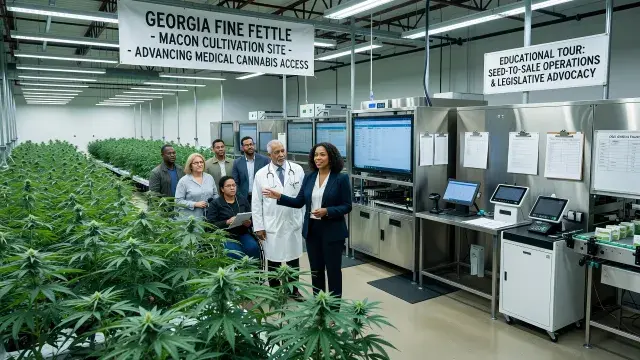
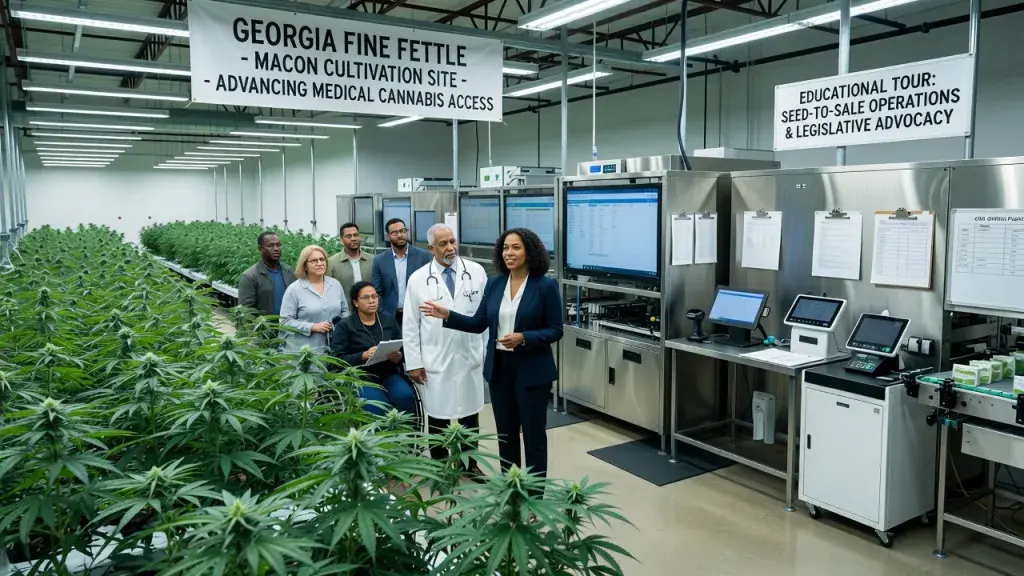
A licensed medical cannabis producer in Macon is trying a different approach to Georgia's legislative gridlock: show, don't just lobby. Georgia Fine Fettle, one of only three licensed medical cannabis operators in the state, recently walked lawmakers, physicians, and patients through its cultivation and manufacturing facility in an effort to demystify a program that's been legal for a decade but still struggles to expand.
The tour matters because Georgia's medical cannabis framework remains tightly restricted compared to programs in other states, and operators say that gap shows up in day-to-day patient access. Vertical integration is the model here - Fine Fettle grows, manufactures, and distributes to dispensaries under one roof - which is precisely the kind of controlled, seed-to-sale operation state regulators point to when defending the program's slow rollout. That controlled environment extends beyond the growroom, too; dispensary operations nationally increasingly depend on integrated retail infrastructure, from compliance logs to a cannabis point of system connecticut style setup that ties inventory tracking to point-of-sale transactions. Georgia's program is still comparatively rudimentary next to that kind of retail technology stack, and that's part of the education gap lawmakers are being asked to close.
Why the Legislation Keeps Stalling
Senate Bill 220 and House Bill 227 both died in their respective chambers this session. Between them, the bills would have eased the path to obtaining a medical cannabis card and expanded the range of approved product forms - changes that sound modest on paper but carry real operational weight. For licensed producers, product form restrictions directly shape SKU management, batch planning, and what can legally sit on a dispensary shelf. Fewer approved forms means fewer options for physicians treating patients who don't respond to what's currently available.
The Access Gap Doctors Are Flagging
Dr. Elmore Alexander's estimate - that current offerings adequately serve roughly 80% of patients, leaving a critical 20% underserved - points to a familiar tension in tightly capped medical markets. When license counts and product categories are both restricted, operators can't easily diversify formulations to meet clinical need. That's not a small business problem; it's a compliance-and-supply-chain problem. Expanding the program would require updated testing protocols, revised packaging rules, and likely new manufacturing capacity, all of which take time to build even after legislation passes.
What Expansion Would Mean for Operators
State Representative Anissa Jones's takeaway from the tour was straightforward: the process is controlled, repeatable, and far from the loosely regulated image some lawmakers may still carry. That perception gap is worth taking seriously. For a limited-license state like Georgia, every expansion decision reshapes competitive dynamics among the few operators holding licenses.
- Broader card eligibility would likely increase patient volume across all three licensed operators.
- New product forms would require updated lab testing and COA documentation before reaching dispensary shelves.
- Any regulatory change would need corresponding updates to compliant packaging and labeling standards.
- Slow legislative movement continues to limit wholesale product diversity relative to more mature medical markets.
Fair enough - facility tours won't rewrite a bill by themselves. But they do shift the conversation from abstraction to operational reality, which is often what stalled cannabis legislation needs most.