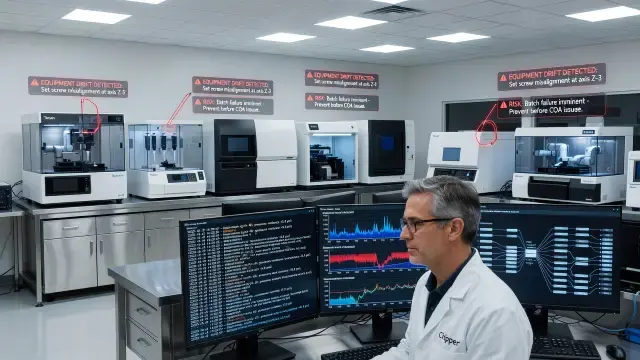
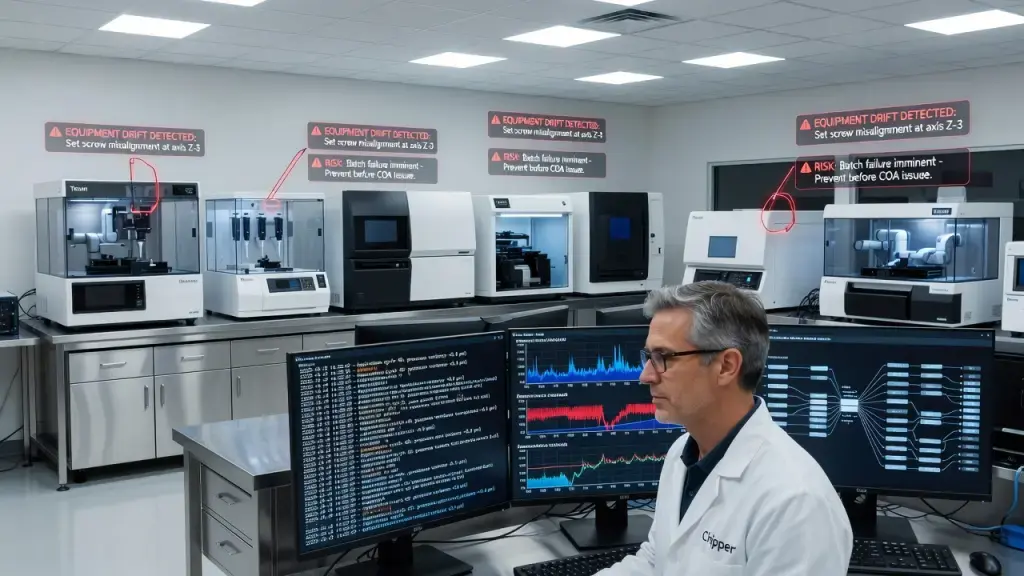
Cannabis testing labs operate under some of the tightest compliance pressure in the industry - state-mandated potency testing, pesticide screening, microbial analysis, all of it feeding into the certificate of analysis that determines whether a batch reaches a dispensary shelf at all. A delayed or failed test run isn't just an inconvenience; it can hold up wholesale delivery manifests, push back product launches, and in some markets trigger retesting requirements that cost both time and money. Yet according to Josh Benhamou, founder and CEO of lab software company Chipper, many labs - cannabis and otherwise - already hold the data that could prevent a lot of this disruption. It just sits unread in instrument log files until something breaks.
Why This Matters for Cannabis Testing Operations
Speaking at the 2026 AI in Lab Automation Digital Summit, Benhamou, who previously built lab software at Synthego and GRAIL, laid out a case that applies directly to the cannabis testing sector: labs don't monitor their instruments in real time, they struggle to predict equipment failure before it happens, and they often track utilization manually - spreadsheets, whiteboards, shared calendars. For a cannabis lab juggling potency panels, heavy metals screening, and terpene profiling on a tight turnaround, that's not a minor inefficiency. It's a compliance risk hiding behind a QC pass rate.
Benhamou's argument is that these aren't three separate problems. They trace back to one source: the raw hardware logs instruments generate with every run, not the polished QC output labs actually review. "They're not three separate problems, and they definitely don't have three separate solutions," he said.
What a Process Model Actually Does
A process model, as Benhamou defines it, is a digital representation of lab operations built automatically from existing instrument logs - no new sensors, no script changes, no revalidation. The approach runs in three phases: ingestion of logs from liquid handlers and workcells into a centralized pipeline; a learning phase using roughly 90 days of historical runs to build a lab-specific baseline; and real-time monitoring that flags deviations before they become failures.
For a cannabis testing lab operating under state accreditation requirements, that third phase matters most. Catching instrument drift before a batch fails QC means fewer retests, fewer delays to the lab's turnaround commitments, and fewer awkward calls to cultivators or processors waiting on a COA. Benhamou described one anonymized example - a misconfigured set screw on a liquid handler that caused subtle, repeated aspiration failures nobody noticed until QC flagged a cluster of bad results on one side of a plate. "It's a subtle thing you don't notice, and it's kind of an insidious failure," he said. In a cannabis context, that kind of undetected drift could mean inaccurate potency readings reaching a dispensary's wholesale menu before anyone catches the problem.
Validation, Ownership, and the Build-or-Buy Question
Labs operating under strict quality frameworks will rightly ask about validation. Benhamou noted that most quality teams Chipper has worked with treat process models as read-only monitoring tools sitting outside formal validation requirements, since they don't alter the assay or control the equipment directly. That said, labs working under stricter regulatory frameworks should confirm that position with their own quality unit rather than assume it applies uniformly - state cannabis testing regulations vary, and what passes muster in one jurisdiction's lab accreditation program may draw more scrutiny in another.
The practical hurdle isn't the data - it's the talent. Reading a Tecan log with 20,000 lines per run, or a Hamilton's terse few hundred, takes machine learning engineers skilled in time-series anomaly detection plus instrument expertise to interpret what the signals actually mean. That's a steep ask for a mid-sized cannabis lab already stretched between compliance staff, lab technicians, and the back-office work of managing sample chain-of-custody documentation.
What Lab Operators Should Weigh
- Instruments worth roughly $50,000 or more with ongoing preventive maintenance needs deliver the most value from process modeling; simple walk-up equipment delivers far less.
- About 90 days of historical log data is generally enough to establish a workable baseline.
- Process models function as a monitoring layer alongside a lab's LIMS, not a replacement for it - the LIMS remains the system of record for what testing occurred.
- Fleet-level utilization data can reveal uneven instrument use, which concentrates operational risk and complicates capital equipment decisions.
For cannabis testing labs weighing whether to build or buy this kind of monitoring, the calculation isn't really about the data - it's already there. The real question is whether the operational upside, fewer failed runs, faster root-cause analysis, better-informed equipment purchases, justifies the specialized talent or vendor cost required to put that dormant log data to work.