The controversy swirling around Nvidia CEO Jensen Huang has little to do with cannabis on its face. But the underlying question - how much a regulated industry should depend on the judgment and conduct of a single executive - lands squarely on cannabis retail's doorstep. It's a sector built on trust extended by regulators, landlords, banks and payment processors to individuals who hold licenses, sign leases and control seed-to-sale data. When that trust gets tested at the top of a tech giant, operators in a far more scrutinized industry should pay attention.
Licensed Businesses Live Under a Different Standard
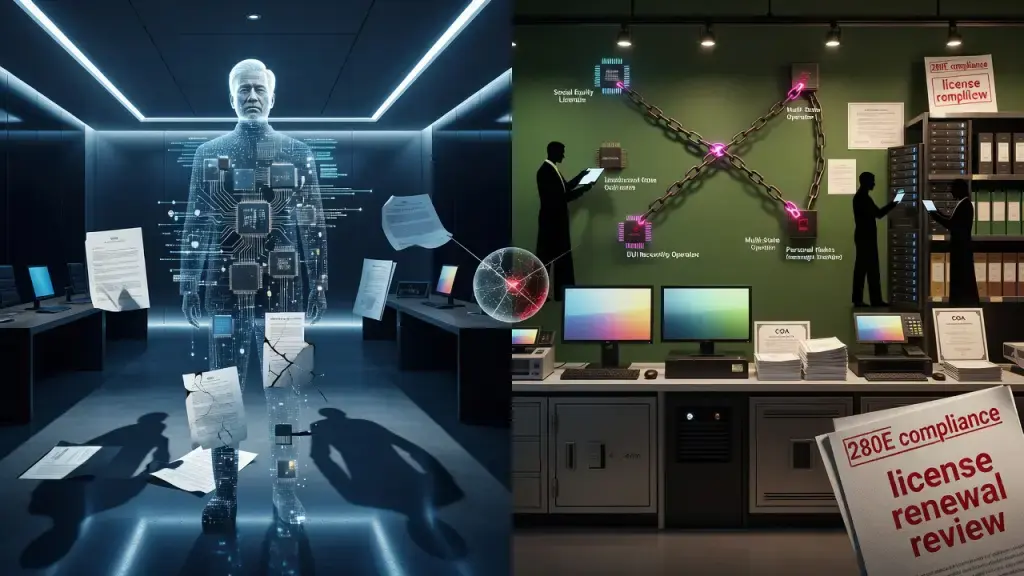
Cannabis operators already know what it feels like to have personal conduct treated as a business liability. State cannabis boards routinely run background checks on license holders, key employees and sometimes even investors with minority stakes. A DUI, an undisclosed business relationship, an unreported change in ownership - any of these can trigger a compliance review or jeopardize a license renewal. That's not paranoia; it's baked into most state regulatory frameworks, which treat character and financial disclosure as core to public trust, not a footnote.
Compare that to the tech sector, where a CEO's personal entanglements can apparently generate a national-security conversation without touching his employment status. Cannabis executives don't get that cushion. A dispensary owner facing a licensing board doesn't get to lean on "he's too valuable to lose." In practice, though, both industries face the same underlying issue - what happens when the person entrusted with sensitive information, whether chip designs or METRC credentials, becomes a point of vulnerability.
Data, Access and the Human Weak Point
Dispensaries and multi-state operators sit on a lot of sensitive material: customer purchase histories, compliance logs, wholesale pricing, supplier contracts, security protocols for cash handling. Seed-to-sale systems and POS terminals generate detailed records that regulators, banks and sometimes law enforcement can request. The industry has spent years hardening those systems against hacking and inventory shrinkage. What gets less attention is the same risk Huang's situation raises - a trusted insider, not a firewall, as the actual point of failure.
For a general manager with access to compliance software, a compliance officer handling COAs, or an owner negotiating wholesale deals across state lines, personal vulnerabilities - financial pressure, undisclosed relationships, compromised judgment - can translate into real operational risk. Social equity licensees and small operators, often stretched thin on staff, may have fewer internal controls to catch this early. That's a vulnerability worth naming plainly, not something to treat as outside the business conversation.
Why the Double Standard Matters for Investors and Regulators
The defense Huang received from prominent figures - that his importance to American AI outweighs scrutiny of his conduct - doesn't translate to cannabis, and operators should understand why. Because the plant remains federally illegal and the industry still fights for basic banking access under rules like 280E, cannabis companies don't get the benefit of the doubt that a semiconductor giant does. Investors evaluating a multi-state operator, a landlord weighing a retail lease, or a payment provider considering cashless payment integration will all run more conservative judgment on leadership conduct than Washington apparently applied to Huang.
- License boards can treat undisclosed personal or financial entanglements as grounds for review, not just gossip.
- Payment processors and banks serving cannabis accounts tend to apply heightened due diligence on ownership and management, given the industry's already elevated compliance burden.
- Insurance underwriters and landlords frequently factor executive reputation and disclosure history into lease and coverage terms.
The lesson for cannabis operators isn't that Huang's situation is comparable in scale. It's that the questions being asked about him - who holds outsized control, what happens when personal conduct intersects with sensitive access, and whether institutions are too quick to excuse it - are questions cannabis businesses answer to regulators every single day. That's not a burden unique to this industry. It's simply one the industry has never had the luxury of avoiding.