Dutchie has rolled out Consumer AI, a suite of four artificial intelligence tools built directly into its point-of-sale and e-commerce platform, aimed at helping cannabis dispensaries reduce labor overhead, lift average order value, and manage brand reputation from a single system. The company serves more than 6,500 dispensaries across North America and has processed over $100 billion in transactions - which makes this release something the broader cannabis retail technology market will have to reckon with. The launch comes as operators face mounting pressure to improve unit economics in a slower-growth environment, with federal rescheduling discussions adding both opportunity and uncertainty to long-term planning.
What's striking about the product strategy is the unifying logic underneath it. Rather than offering standalone AI modules that require separate logins, data exports, or third-party integrations, Dutchie is threading all four tools through a single customer identity layer that connects phone, online, in-store, and review interactions. That architecture matters operationally: a budtender at the register sees the same customer history that the e-commerce concierge used to build a cart an hour earlier. For dispensary operators in competitive state markets - from California's crowded adult-use environment to tightly licensed jurisdictions - consistent cross-channel service has been genuinely hard to execute without custom builds or a patchwork of vendor tools. Operators exploring purpose-built options in regulated markets, including those using cannabis dispensary software alaska, understand the practical difficulty of syncing customer data across touchpoints when systems don't share a common data model.
The four tools divide cleanly by function. Voice AI acts as a virtual receptionist - answering inbound calls, surfacing live inventory and active deals, placing orders, and confirming pickups, with handoff to staff when a situation requires human judgment. The pitch is straightforward: missed calls are missed revenue, and scheduling enough staff to cover phone volume during peak hours is a real labor cost. Agentic Commerce drops an AI concierge into the e-commerce and kiosk flow, capable of building carts from natural-language inputs - something like "a sleep product under $30" - reconstructing prior orders in one tap, and swapping out-of-stock SKUs with suitable alternatives before the customer abandons the session. That last function is worth pausing on. Inventory churn is a persistent operational reality in cannabis retail; a tool that handles substitutions intelligently rather than simply surfacing an out-of-stock error could meaningfully reduce cart abandonment.
Standardizing the Budtender Experience at the Register
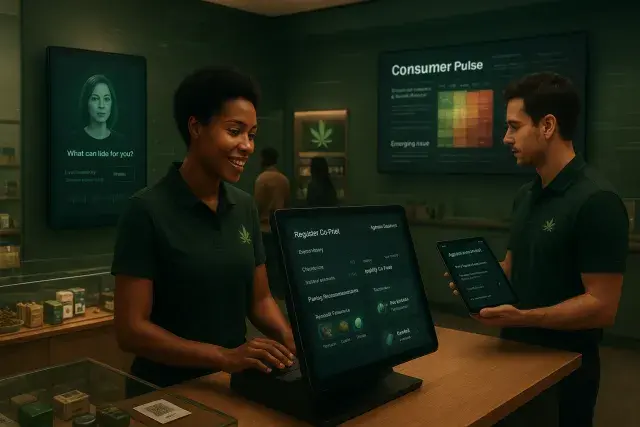
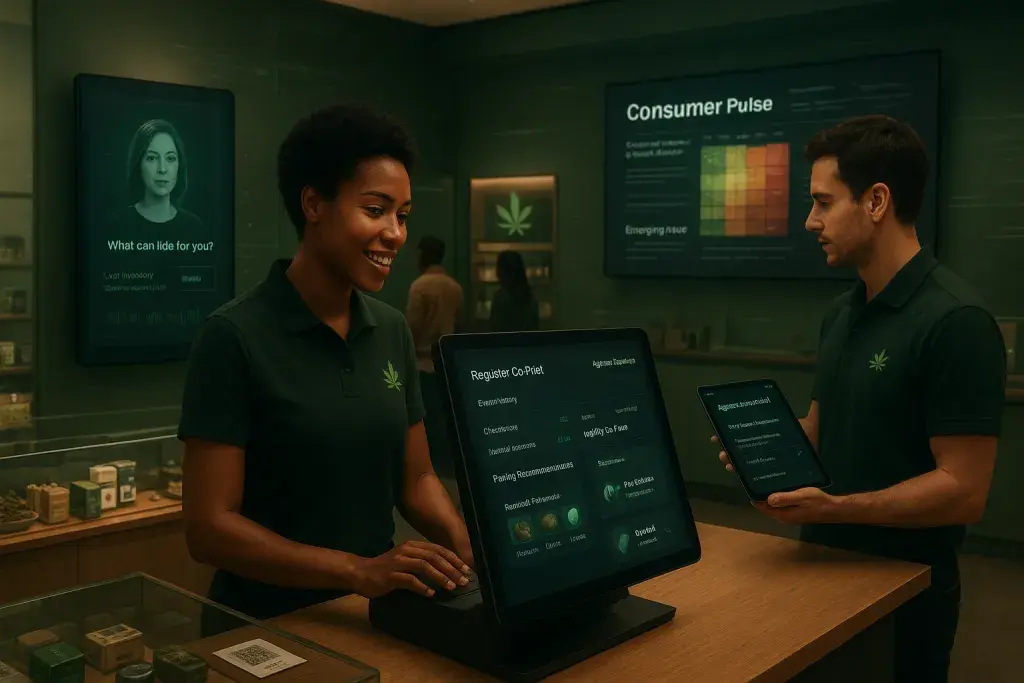
Register Co-Pilot is where the suite gets most operationally pointed. Embedded directly in the Dutchie register, it surfaces customer purchase history, pairing recommendations, upsell prompts, loyalty status, and payment shortcuts at the moment of transaction. The underlying problem it's solving is one every multi-location operator knows well: performance variance across staff. A dispensary's top budtender might consistently close larger baskets and generate more loyalty sign-ups, but replicating that across a full floor - through training alone - is slow and inconsistent. Co-Pilot is designed to bring every transaction closer to that ceiling by giving all staff the same contextual prompts in real time, without requiring them to memorize product catalogs or customer preferences independently.
There's a compliance dimension here too, even if Dutchie isn't leading with it. In regulated cannabis retail, every product recommendation technically touches on age verification, purchase limits, and in some jurisdictions, medical versus adult-use eligibility. A POS-integrated AI that surfaces product context must be careful not to create prompts that push staff toward recommendations that run afoul of state-specific rules - particularly around dosing language or claims about product effects. How Dutchie has handled guardrails on those prompts isn't detailed in the current release, and it's a fair question for operators doing due diligence before enabling the tool on the floor.
Consumer Pulse and the Reputation Problem in Competitive Retail
Consumer Pulse takes a different angle entirely. It aggregates first-party survey data - pulled from digital receipts, post-order flows, and other customer touchpoints - alongside public reviews from across the web, and consolidates everything into a single sentiment dashboard. The tool tracks recurring themes, flags emerging issues, and surfaces alerts before a service problem compounds into a ratings hit.
To put it plainly: online reputation now functions as de facto marketing for dispensaries in markets where paid advertising remains severely restricted. Cannabis operators can't run standard digital ad campaigns on major platforms the way a conventional retailer can. That constraint makes organic review management disproportionately important - and it also means negative review velocity can damage a store's visibility and walk-in traffic faster than it would for an unrestricted competitor. A tool that connects product sentiment to merchandising decisions and surfaces staff-level service issues before they metastasize into one-star patterns has genuine business value in that context.
What This Means for the Broader Market
From an investor and competitive standpoint, Consumer AI reads as a deliberate move to deepen platform stickiness. Operators embedded in Dutchie's POS ecosystem don't switch lightly - data migration, staff retraining, and compliance continuity are all real friction points. Layering AI functionality that's architecturally integrated, rather than bolted on, raises the cost of switching further while expanding the share of operational spend that flows through the Dutchie platform.
The timing is also deliberate. Federal cannabis rescheduling - still unresolved, but actively discussed - would shift the tax burden under 280E, potentially improving cash flow for operators and accelerating investment in technology infrastructure. Dutchie appears to be positioning itself to capture that spending when it arrives, rather than after. Whether Consumer AI delivers on its specific performance claims will depend on implementation quality, operator adoption rates, and how well the single-identity layer actually holds up across the messy reality of high-volume dispensary traffic. But the structural bet - that cannabis retail will consolidate around integrated operating platforms as the market matures - is a reasonable one.