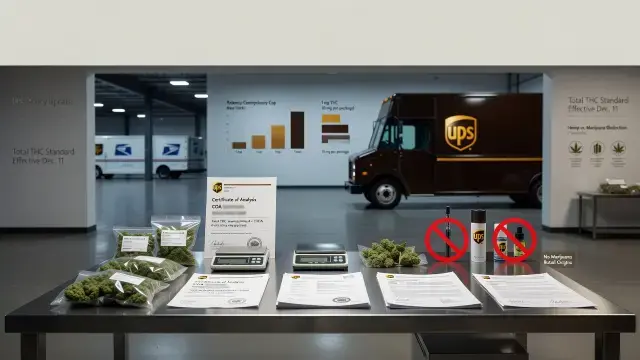
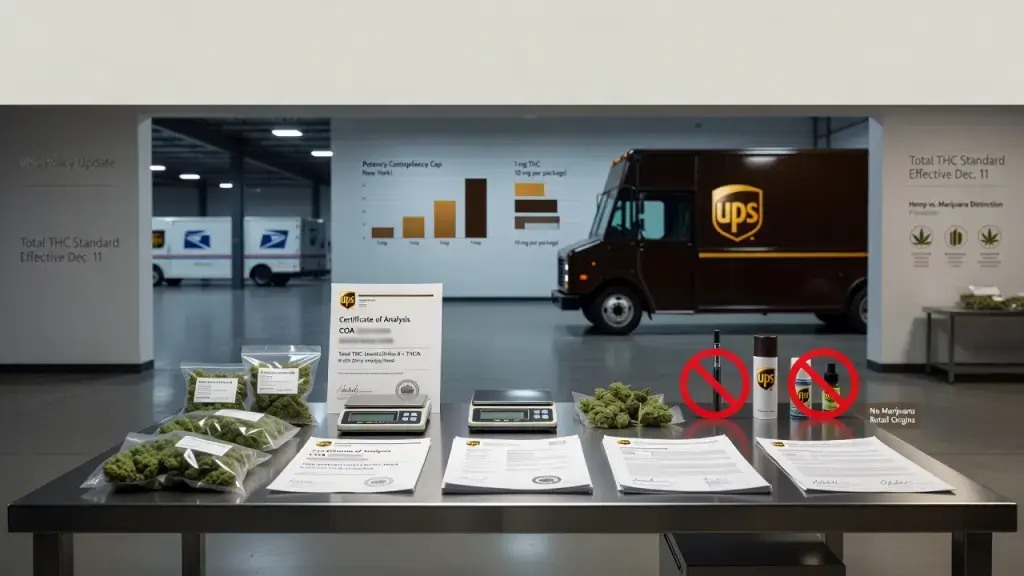
Hemp operators who rely on the mail to move product have a compliance problem on their hands, and it's arriving fast. A federal deadline set for Dec. 11 will reshape what counts as legal hemp, and so far only one major carrier - UPS - has rewritten its shipping terms to match. USPS and FedEx haven't moved yet, leaving shippers to guess at how their packages will be treated once the new standard kicks in.
What Changed, and Why It Matters
Congress bought the hemp industry a short reprieve in early September, pushing back a looming restriction on certain hemp-derived products by four weeks. That reprieve expires Dec. 11. The practical effect: the legal definition of hemp is shifting from the 2018 Farm Bill's delta-9 THC threshold to a "total THC" standard that also counts THCA. That's not a small technical tweak. THCA converts to delta-9 THC when heated, and plenty of raw hemp flower that tested compliant under the old delta-9-only math will not clear the bar once THCA gets folded in.
UPS has already rewritten its terms and conditions to reflect that shift. Raw hemp shipments must now include a certificate of analysis showing total THC - delta-9 plus THCA - at or below 0.3% on a dry-weight basis. Michelle Bodian, a hemp beverage attorney, flagged the update publicly, noting UPS's prior policy language still referenced delta-9 THC alone, in line with the outgoing standard.
Operational Realities for Shippers
For companies moving raw plant material, the bar is higher than a simple COA requirement. UPS says hemp in plant form is accepted only through a dedicated account, backed by licenses and a signed carrier agreement - a contractual arrangement, not an open-door shipping option. That's a meaningful operational hurdle for smaller processors and brokers who've been shipping flower through standard retail accounts.
UPS also requires shippers to carry all necessary state and local licenses, and it has started pointing to state-specific potency caps as a compliance reference point. New York's cannabinoid hemp rules - 1 milligram of THC per serving, 10 milligrams per package, up to 100 milligrams of total cannabinoids per serving and 3,000 per package - were cited directly in the carrier's guidance. That signals something worth noting: carriers are no longer treating hemp as a single federal category. State potency limits are becoming part of the shipping compliance equation, not just a retail-licensing concern.
- Raw hemp requires a dedicated UPS account, licensing documentation, and a signed agreement
- Shipments need a COA showing total THC (delta-9 plus THCA) at or below 0.3% dry weight, effective Dec. 11
- Synthetic or lab-made cannabinoids are prohibited outright
- Vaping products and other aerosolized cannabinoid derivatives are barred from shipment
- UPS won't accept hemp shipments from any location that also sells marijuana products
The Carrier Gap Is the Real Risk
Here's the catch: UPS updating its policy doesn't mean the mail system as a whole has caught up. USPS and FedEx haven't published equivalent changes, which means shippers moving product across multiple carriers could face inconsistent screening, inconsistent documentation demands, and inconsistent odds of a package getting flagged or destroyed. UPS has reserved the right to dispose of noncompliant shipments outright - a policy mirrored across its treatment of other regulated goods like alcohol, tobacco and firearms.
Cannabis itself remains federally scheduled and stays off UPS's shipping list entirely, regardless of state legalization status. That distinction - hemp as a conditionally shippable commodity, marijuana as categorically prohibited - is one hemp brands, wholesalers and co-packers need to keep straight internally, especially if their supply chain touches both hemp-derived and cannabis-licensed facilities. A shipment flagged for originating at a marijuana retailer gets refused outright under UPS's rules, no COA required.
What Operators Should Do Now
With roughly a month before the new standard takes hold, hemp brands, processors and wholesalers should be auditing lab partners now to confirm COAs report total THC, not just delta-9. Product formulated to the old standard may need reformulation, repackaging, or a hard look at whether it can legally move through the mail at all after Dec. 11. Waiting for FedEx or USPS to publish guidance isn't a strategy - it's a gap in the compliance log waiting to happen.