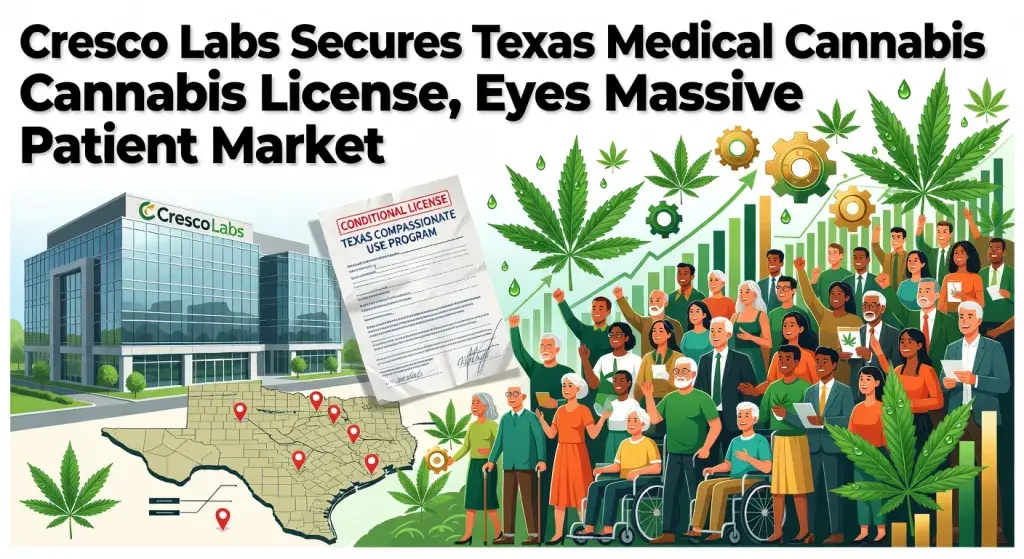
Cresco Labs, one of the largest multi-state cannabis operators in the United States, has been conditionally awarded a vertically integrated license under the Texas Compassionate Use Program - a move that grants the company cultivation, processing, and dispensary rights in the nation's second-most populous state. The license, won through a merit-based application process, positions Cresco to serve a potential patient pool drawn from nearly 30 million residents. That's a big deal, even by the standards of an industry accustomed to thinking in large numbers.
What the License Actually Means
Texas's Compassionate Use Program, originally signed into law in 2015, started narrow - restricted to intractable epilepsy patients and limited to low-THC cannabis products. Over the years, the legislature has expanded qualifying conditions incrementally, broadening access to patients with cancer, PTSD, seizure disorders, multiple sclerosis, and other conditions. But the program remains among the most restrictive in the country, with a small number of licensed operators and tight regulatory guardrails.
A vertically integrated license, the kind Cresco was awarded, means the company controls the entire supply chain: growing the plant, manufacturing products, and selling them to patients through its own dispensaries. In a market with few licensees, this is more than a permit - it's a franchise. Cresco operates its retail locations under the Sunnyside brand, and one can reasonably expect that name to appear across Texas storefronts in the months ahead.
Strategic Fit: Capital Efficiency and the Long Tail
Here's the thing about cannabis licensing: it's expensive. Acquiring existing licenses through M&A often involves hefty premiums and balance-sheet strain. Cresco CEO Charlie Bachtell was explicit about the financial logic. "Organic licensing enables capital-efficient market entry," he said, noting the company's cash generation and balance sheet provide flexibility to build out a long-term platform without overleveraging.
That language matters. The cannabis industry has been through a brutal correction over the past few years - stock prices cratered, several operators restructured or defaulted on debt, and the promise of imminent federal legalization grew stale. Companies that survived the downturn did so largely by cutting costs, rationalizing their footprints, and refusing to overpay for expansion. Winning a license organically - through regulatory expertise and community engagement rather than an acquisition - fits squarely into the discipline that separates survivors from casualties in this sector.
Cresco already maintains a portfolio of widely distributed cannabis brands and operates in multiple states. Adding Texas through a merit-based award, rather than a bidding war, keeps the cost of entry low relative to the potential upside. And in Texas, the upside is enormous - if the market opens further.
The Texas Question: Slow Burn or Breakout?
That "if" carries real weight. Texas has moved cautiously on medical cannabis, and broader legalization - recreational or otherwise - remains politically uncertain in Austin. The legislature has considered various expansion bills in recent sessions, with mixed results. Qualifying conditions have widened, yes, but the pace has been glacial compared to states like Florida, New York, or Illinois.
Still, demographic and political trends suggest the direction of travel. Polling consistently shows growing public support for medical cannabis access nationwide, and Texas is no exception. The sheer size of the state's population means that even under restrictive conditions, the addressable patient base is substantial. If qualifying conditions continue to broaden - or if the legislature eventually permits higher-THC formulations and additional product categories - early licensees stand to benefit disproportionately.
Cresco is, in effect, buying a call option on Texas's regulatory future. The entry cost is manageable; the potential payout, considerable.
What Comes Next
The award is conditional, which means Cresco still needs to satisfy final regulatory requirements before operations begin. Buildout timelines for cultivation and dispensary facilities will follow. But the hard part - securing one of a limited number of licenses in a state that doesn't hand them out freely - is done.
For Texas patients, the practical question is whether another well-capitalized operator entering the market translates into better product availability, more consistent quality, and improved access. Cresco's track record in other medical states suggests it will. For investors and industry observers, the signal is clearer still: disciplined operators are finding ways to grow without lighting cash on fire. In an industry that spent years doing exactly that, the restraint is almost refreshing.