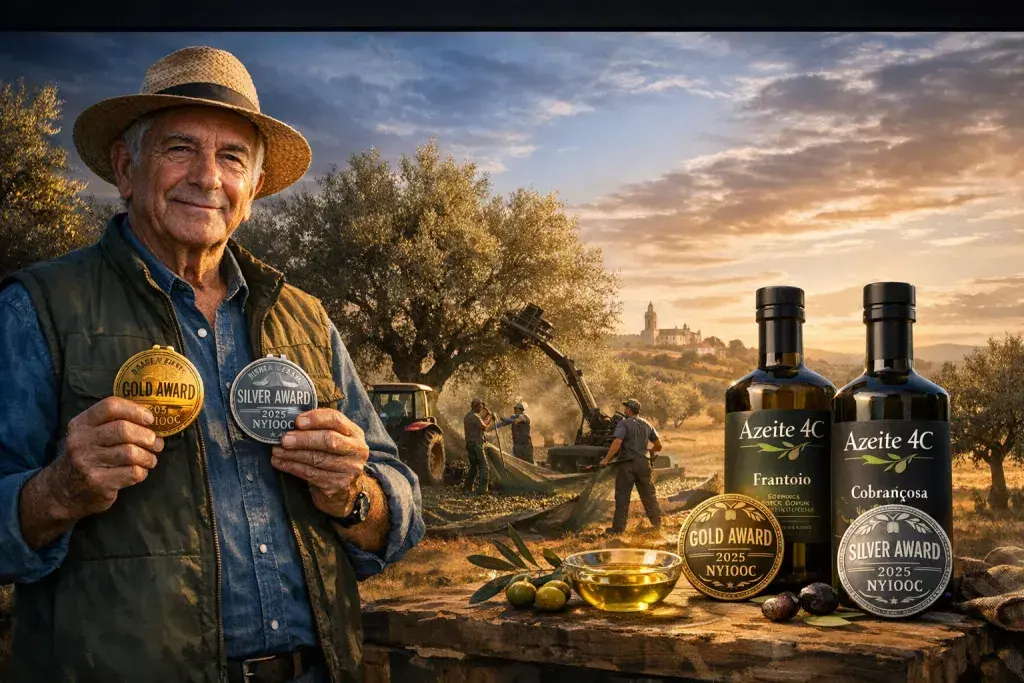
Portuguese producer Azeite 4C secured a Gold Award and a Silver Award at the 2025 NYIOOC World Olive Oil Competition for its extra virgin oils from Frantoio and Cobrançosa olives. Owner Francisco Lopes manages over 10,000 trees across four plots in Serpa, Alentejo, where clay-rich soils support ancient olive cultivation alongside grains, sheep pastures, and cork oaks. These wins highlight a shift from traditional methods to precision-driven production amid climate challenges.
Reviving Roman-Era Lands with Modern Precision
Francisco Lopes oversees olive groves in Serpa that trace back to Roman times, sharing fertile clay and limestone soils with wheat, barley, oats, vineyards, and cork forests. The Mediterranean climate delivers hot summers and mild winters, ideal for olives but tested by variable weather. Azeite 4C, founded in 2016, spans plots from five to ten hectares, now fitted with drip irrigation to boost sustainability.
Lopes follows an integrated production protocol, blending biological and chemical controls while favoring natural mechanisms. Soil management, proper fertilization, pruning, pest control, and mechanical harvesting form core routines. This approach yields healthy olives processed immediately, contrasting sharply with past practices where overripe, worm-infested fruit fermented before pressing in family stone mills.
Overcoming Harvest Hurdles for Award Quality
The 2024 harvest challenged Azeite 4C with dry winter and spring followed by autumn rains, complicating quality extraction in Portugal's top olive oil region. Yet the oils earned top honors at the NYIOOC, showcasing monovarietal distinctions: Frantoio's unique profile secured gold, Cobrançosa silver. Lopes commercializes only single-variety oils to preserve these flavors.
Prospects brighten for 2025/26. Mild, rainy winter revived trees, sparking impressive blossoms. Early signs point to a strong yield, underscoring irrigation's value against climate shifts that punish unirrigated groves.
Family Legacy Fuels Quality Revolution
Lopes, a chemical engineer, draws from 50 years of family milling with hydraulic presses and refineries. After retiring, he restarted at 74, transforming regional norms. Olives now arrive fresh at mills, emphasizing health, timing, and equipment cleanliness over delayed, fermented processing.
Labor shortages persist, with workers from India, Nepal, and Pakistan filling gaps despite mechanization's high costs. Many shift to super-intensive systems. Exports to France, Belgium, Poland, and Hungary complement Portuguese specialty sales, fueled by rising consumer demand and frequent media coverage of quality production.
Lessons for Aspiring Producers
Portugal ranks high in olive oil volume and quality, drawing new entrants. Lopes urges perfectionists to master olive culture, stay disciplined, monitor trees, and act swiftly. Respect nature, ignite passion, and prioritize quality, he advises. For those embracing these principles, the sector offers real promise amid evolving challenges.