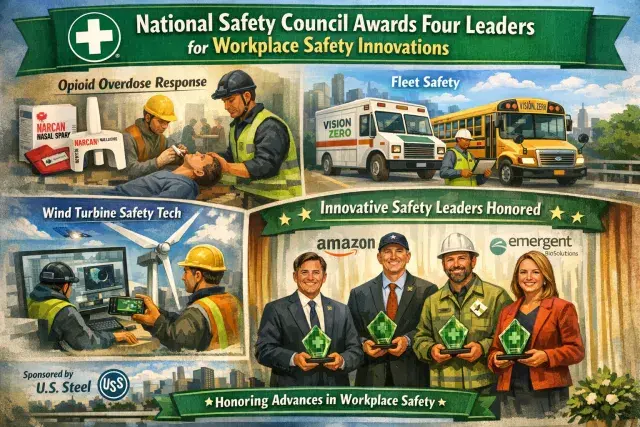
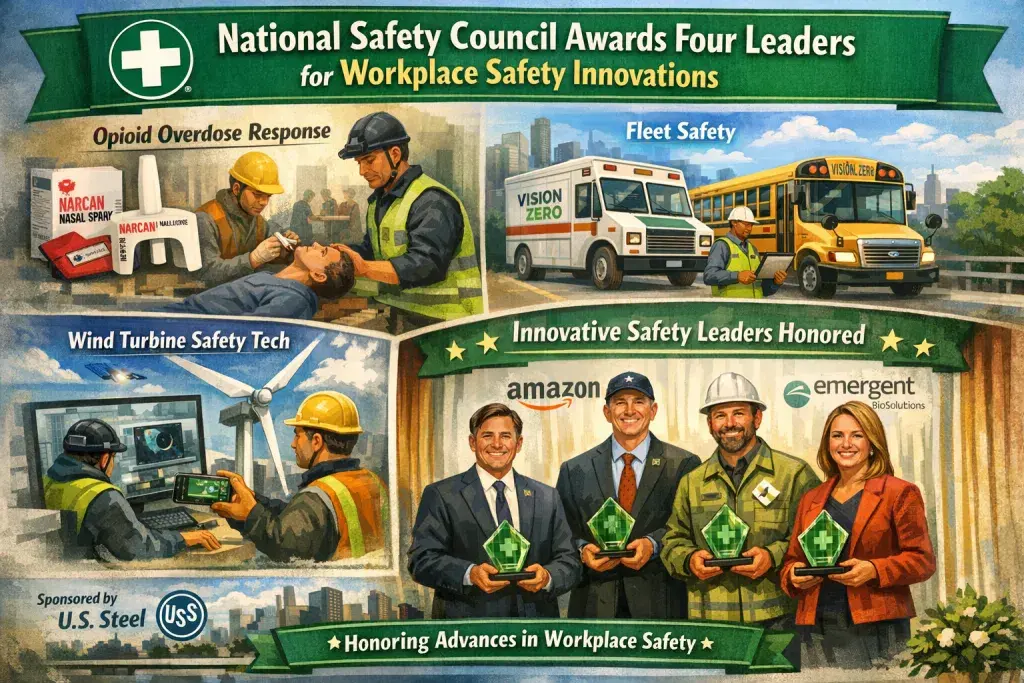
The National Safety Council presented its Green Cross for Safety Awards to four organizations on Tuesday in Denver, recognizing their standout efforts in safety advocacy, excellence, and innovation during the 26th annual celebration sponsored by U.S. Steel. These honors spotlight practical steps companies and agencies take to protect workers amid rising workplace hazards like opioid overdoses and vehicle crashes. The event raised over $788,000 to support safety initiatives, underscoring a collective push to reduce injuries and fatalities.
Advocates Tackle Opioid Crisis in Workplaces
Amazon and Emergent BioSolutions earned Safety Advocate Awards for expanding access to naloxone, the overdose-reversal drug, in professional settings. Amazon stocks this medication across its North American facilities, responding to urgings from public health officials amid the ongoing opioid epidemic that claims hundreds of thousands of lives annually in the U.S. Emergent, producer of NARCAN Nasal Spray now available over the counter, educates businesses—from construction sites to airlines—on preparing for accidental exposures, mirroring the ubiquity of automated external defibrillators for cardiac events.
These moves address a gap in workplace preparedness. Opioids infiltrate offices and factories through personal use or laced substances, turning everyday environments into potential emergency zones. By normalizing naloxone alongside fire extinguishers, these companies model how employers can bridge public health needs with operational duties, potentially saving lives before first responders arrive.
Fleet Safety Drives Urban Crash Reductions
The New York City Department of Citywide Administrative Services received the Safety Excellence Award for managing the nation's largest municipal fleet of over 28,500 vehicles, plus oversight of a 10,000-bus school fleet. Since 2017, its Safe Fleet Transition Plan—updated in 2019 and 2024—integrates technologies like intelligent speed assistance, truck sideguards, and telematics to align with Vision Zero, New York City's 2014 pledge to eliminate traffic deaths. The agency reports more than 100,000 safety upgrades implemented, positioning it as a national benchmark.
Vision Zero, rooted in Swedish road safety principles, treats fatalities as preventable through engineering and enforcement rather than inevitable accidents. DCAS's partnership with the U.S. Department of Transportation's Volpe Center formalizes these interventions, curbing risks in dense urban settings where trucks and buses amplify collision severity. Such fleets influence citywide safety, as safer municipal vehicles set standards for contractors and reduce taxpayer costs from wrecks and medical bills.
Remote Tech Minimizes High-Risk Energy Repairs
Puget Sound Energy claimed the Safety Innovation Award for installing SYTIS TC-90 cameras inside wind turbine nacelles and electrical enclosures. These devices allow remote diagnosis of heat buildup and faults, slashing the need for hazardous climbs and close electrical exposures that risk shocks, falls, or arc flashes. Success prompted field deployment to pinpoint converter failures early, averting fires and outages.
Wind energy maintenance demands work at extreme heights and voltages, where early detection prevents disasters. This camera system exemplifies how targeted tech extends human oversight without added peril, aligning with broader renewable sector demands for reliable uptime. As turbines proliferate to meet clean energy goals, innovations like these protect technicians while sustaining power grids.
NSC CEO Lorraine M. Martin praised the winners for their far-reaching impact on workplaces and communities. Their approaches—stocking antidotes, upgrading fleets, deploying cameras—reveal scalable paths forward, countering persistent threats from drugs, roads, and machinery in an era of evolving risks.