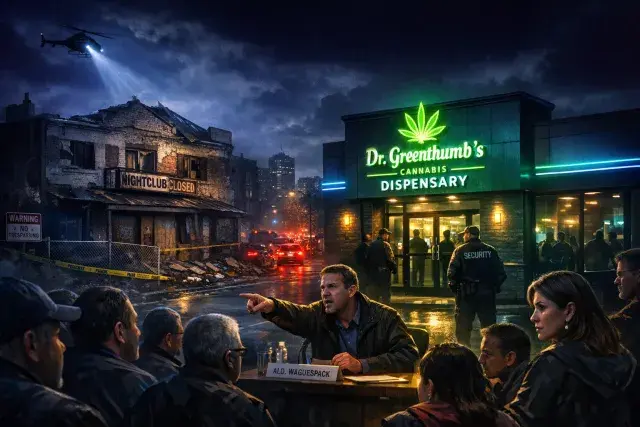
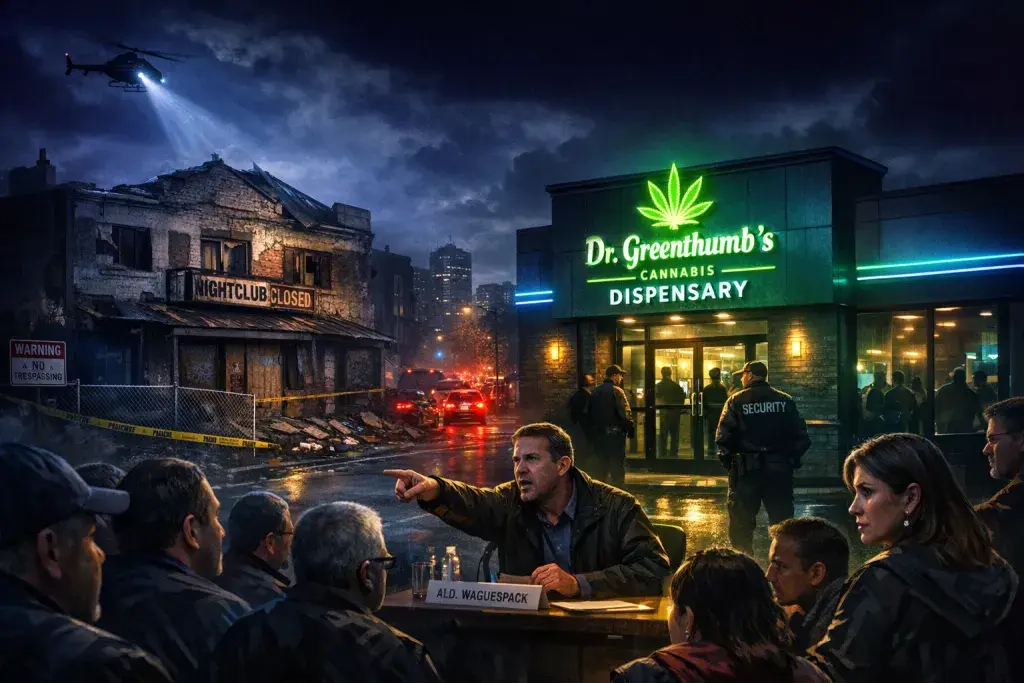
A cannabis dispensary chain plans to transform a long-vacant, condemned nightclub in Chicago’s Bucktown neighborhood into its first Illinois outpost, sparking opposition from nearby residents over traffic and community character. Dr. Greenthumb’s, operated by TRP, unveiled renovation and security proposals at a Wednesday community meeting hosted by Ald. Scott Waguespack (32nd Ward) for about 20 neighbors. The move revives a site scarred by violence and decay, raising questions about balancing economic benefits against local quality-of-life strains.
From Violence-Plagued Club to Abandoned Eyesore
The building at 2200 N. Ashland Ave. once housed Green Dolphin Street, a nightclub notorious for violence through the 2000s and 2010s. A fatal 2015 altercation that killed two people marked its nadir, leading to a brief reopening under a new name before permanent closure in 2017. Since then, the structure has deteriorated, attracting vandals and unauthorized raves, which prompted Waguespack to emphasize securing and revitalizing it. Extensive renovations remain essential before any occupancy, addressing both structural issues and neighborhood nuisances.
Security Promises and Community Hiring Pitch
TRP spokeswoman Anna Mendoza outlined state-mandated security features during the meeting, including electronic ID scanners, no product displays at the front counter, and continuous patrols inside and outside the facility. The company pledged to hire locally, arguing that community familiarity aids smooth operations. Waguespack highlighted dispensaries’ revenue value to the city while stressing the need to eliminate break-ins and restore the property’s appearance. These measures aim to prevent the site’s troubled past from repeating under new management.
Neighbors Cite Traffic Woes and Shifting Identity
Most attendees hailed from the 74-unit Triangle Square condos directly across the street, voicing fears of worsened congestion on Webster Avenue, already strained from 3 to 6 p.m. and recent bridge openings. One resident described exiting their garage as hazardous amid rising accidents, warning that added dispensary traffic could exacerbate dangers. Others lamented a perceived shift from the area’s school-centered identity toward dispensary saturation, pointing to nearby Ivy Hall at 1720 N. Damen Ave. as evidence of an unwanted transformation—one attendee called another outlet a “bait and switch.”
Next Steps Test Community Zoning Tensions
Waguespack defended the meeting’s transparency as a means to air concerns before TRP’s February presentation to the Zoning Board of Appeals. The proposal underscores broader conflicts in gentrifying neighborhoods, where cannabis businesses promise jobs and tax revenue but fuel debates over density, safety, and cultural fit. Without a traffic study yet from TRP, residents’ pushback highlights how revitalization efforts must navigate entrenched local priorities.