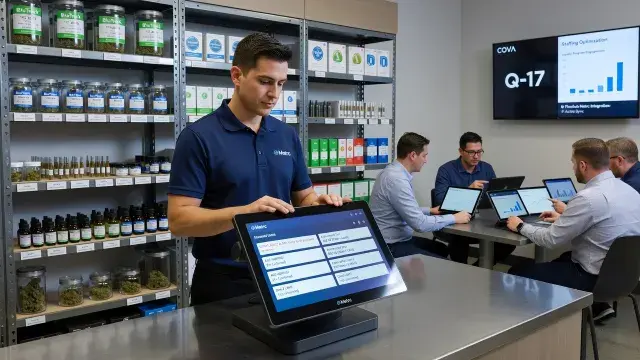
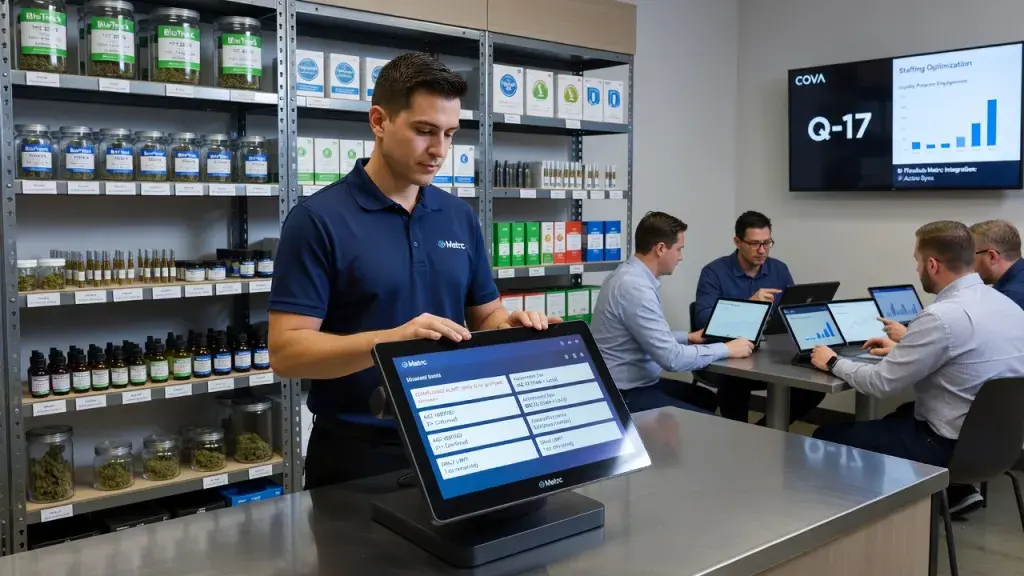
More than 7,000 cannabis stores now operate across the United States, and that number keeps climbing as public support for legalization holds steady. A recent YouGov survey found that 52 percent of Americans have tried marijuana, with a majority of those users reporting activity within the past year. Behind every one of those storefronts sits a piece of infrastructure customers never see: the point-of-sale system that keeps the business compliant, taxed correctly, and open.
Why Dispensary POS Is Not Just Retail Software
A standard retail POS rings up sales and tracks inventory. A cannabis POS does that too, but it also has to answer to state regulators. That means seed-to-sale tracking integration, automated tax calculation, age verification at the register, and purchase-limit enforcement built into every transaction. Miss any one of those functions and an operator isn't just losing efficiency - they're exposed to compliance violations that can threaten a license. That's the real distinction between a generic retail checkout tool and software built specifically for this industry.
The mechanics matter here. Most states require dispensaries to report inventory movement to a centralized tracking system, commonly Metrc, in near real time. A POS that doesn't sync cleanly with that system creates reporting gaps, and reporting gaps invite audits. For a multi-store operator, that risk multiplies across every location and every SKU.
What Operators Should Actually Evaluate
Picking a POS vendor isn't about finding the flashiest dashboard. It's about matching software to operational reality - budget, store volume, staffing, and state-specific reporting rules all factor in. A few things worth checking before signing a contract:
- Whether the system maintains offline functionality during power or internet outages, so transactions and compliance logs aren't lost
- How the vendor handles state-mandated seed-to-sale integration and whether that connection has a track record of stability
- What customer support looks like in practice - response time, availability, and whether a live in-store demo is offered before commitment
- Whether built-in analytics can help with staffing decisions, promotional planning, and loyalty programs without compromising compliance data
Compliance should sit at the top of that list, not the bottom. Everything else - loyalty perks, SMS marketing, smart-screen menus - is secondary to a system that keeps the store within the law.
The Providers Operators Are Comparing
The market has matured enough that dispensary owners now have real choices, not just a handful of early movers. BioTrack offers a full compliance suite with lab-testing integration and dedicated support. COVA has built a reputation on customer service and mobile queuing. Greenbits, now under Dutchie's ownership, remains known for uptime reliability and a large dispensary network. Flowhub, based in Colorado, points to early success integrating with Metrc. MJ Freeway, part of the Akerna portfolio, emphasizes staff scheduling and ROI-focused reporting.
Others serve narrower niches. IndicaOnline layers in Weedmaps integration and delivery tracking. LeafLogix, also acquired by Dutchie, built a cashless payment tool called LeafPay. SellTreez, Barnet, and Viridian Sciences lean into omnichannel and enterprise-grade inventory management, with Viridian running on the SAP Business One backbone used by tens of thousands of companies outside cannabis entirely. C-Trax Serv and KlickTrack round out the field with franchise-focused and full-ecosystem retail tools, respectively.
The Bigger Picture for Compliance and Payments
None of this happens in a vacuum. Cannabis remains federally illegal, which means banking access is limited and cashless payment options are still evolving workarounds rather than settled infrastructure. A POS system that handles tax reporting cleanly also matters for 280E exposure, since dispensaries can't deduct ordinary business expenses the way other retailers can. Age verification and purchase-limit tracking aren't just software features - they're the front line of consumer protection in an industry still building public trust state by state.
Choosing a POS system, in other words, is not a back-office decision. It's a compliance strategy with a cash register attached.